.png)


In the SaaS world, connecting with your target audience demands a unique approach, distinct from traditional marketing tactics.
The goal is to attract new users and convince existing customers to continue their journey with your product.

The power of a well-crafted marketing strategy cannot be underestimated, especially when it comes to the impact on your SaaS growth.
With this in mind, let's dive into the 8 best SaaS marketing campaigns to inspire and guide your next moves.
Let’s begin!
The Purpose of the SaaS Marketing Campaign
At its core, the purpose of SaaS marketing campaigns is to fuel long-term growth.
What does that mean in practice?
By offering free trials and product demos, SaaS companies allow potential customers to experience their products firsthand.
The result?
Establishing your company as a leader in the industry while generating sustainable revenue.
A well-thought-out marketing campaign is a way to an effective strategy that helps consumers make informed purchase decisions.
The strategy unfolds in three key stages:
👉 Initially attracting consumers willing to pay for monthly services,
👉 Convincing them to purchase the product with comprehensive information, and finally,
👉 Retaining existing customers.
Engaging current users with special offers or discounts encourages account upgrades, completing the cycle of the SaaS marketing strategy that brings results at scale.
What’s the Difference between a Marketing Campaign and a Marketing Strategy?
The main difference between a marketing campaign and a strategy lies in their scope and duration.
A marketing strategy is a long-term plan designed to gain a competitive edge in the market.
It pertains to a company's overall objectives and strategies for achieving its target market and establishing a solid market position.
Conversely, a marketing campaign is a tactical execution within this broader strategy, focused on achieving specific objectives through targeted marketing activities.
Still, they have one more crucial distinction!
While a marketing strategy can span several years, providing a framework for sustained growth, a marketing campaign typically operates over a shorter timeframe, aiming for immediate impact and specific results.
Benefits of Marketing Campaign
Exploring the benefits of SaaS marketing campaigns reveals some game-changing advantages for businesses.
Here's a concise breakdown:
✔️ Cost Savings — They're more budget-friendly, reducing the hefty expenses usually associated with traditional marketing.
✔️ Trackable Success — With these campaigns, measuring your impact is straightforward, allowing for tweaks on the fly to boost your return on investment.
✔️ Deep Customer Insights — They offer a goldmine of data on what your audience loves, helping tailor your services to fit their needs perfectly.
✔️ Worldwide Reach — Breakthrough geographical barriers and connect with customers globally, opening up a world of expansion opportunities.
✔️ Quick to Adapt — The digital space lets you test and refine ideas rapidly, keeping you agile and innovative in your market.
The List of 8 Best SaaS Marketing Campaigns To Inspire You
We've compiled a list of the 8 best SaaS Marketing Campaigns to inspire you.
Let’s examine them.
1. Zapier

Zapier stands out as a powerful tool that seamlessly connects over 6,000 apps, allowing businesses to automate routine tasks effortlessly through AI workflow automation.
It's designed to turn complex processes into simple, automated workflows.
Integrations such as:
- Sheets ⚡ Slack
- Apollo ⚡ Google Calendar
- Trello ⚡ Gmail
Do you know how they managed to grow to over $230M ARR and 9M organic visits per month, according to Ahrefs?

Instead of using a traditional approach and targeting separate keywords such as “automation tool,” “notion integrations,” etc., they leveraged the power of programmatic SEO to create 100K+ search-optimized landing pages.
They programmatically generated three types of pages:
- A templatized page of a specific app integration (e.g., Notion integrations)
- Templatized pages for app-to-app integrations (e.g., Notion to Gmail)
- Templatized pages for every workflow possible (e.g., “How to Send emails via Gmail for new Notion database items”)
Building these templatized pages for every app they support, every app-to-app integration, and every workflow for connecting the apps helps them build authority and own the search results.
This campaign that turned into a strategy helped them turn SEO from a marketing tactic into their main growth engine.
Why this worked
Channel mix: Zapier combined organic search with programmatic landing pages, app-pair pages, workflow templates, blog content, and partner-generated material. The important part was the connection between high-intent searches and pages that could immediately lead visitors into a relevant automation.
Approximate results: In Ahrefs' analysis, Zapier's blog generated about 1.6 million organic visits per month, while its app directory and pair pages were generating more than 299,000 monthly organic visits. These figures are from external Ahrefs analyses rather than current first-party reporting, so they should be treated as estimates.
Key takeaways:
- Use programmatic SEO to create a large number of search-optimized landing pages.
- Build templatized pages for predictable elements on your website so you can use them to easily recreate lookalike pages and publish them at scale.
2. MailChimp

Mailchimp is an email marketing tool that offers top-notch technology and assistance to help your company start, develop, and expand to realize your unique vision.
They aimed to engage small business (SMB) owners with a creative touch.
So, they needed a standout SaaS campaign.
What did they do?
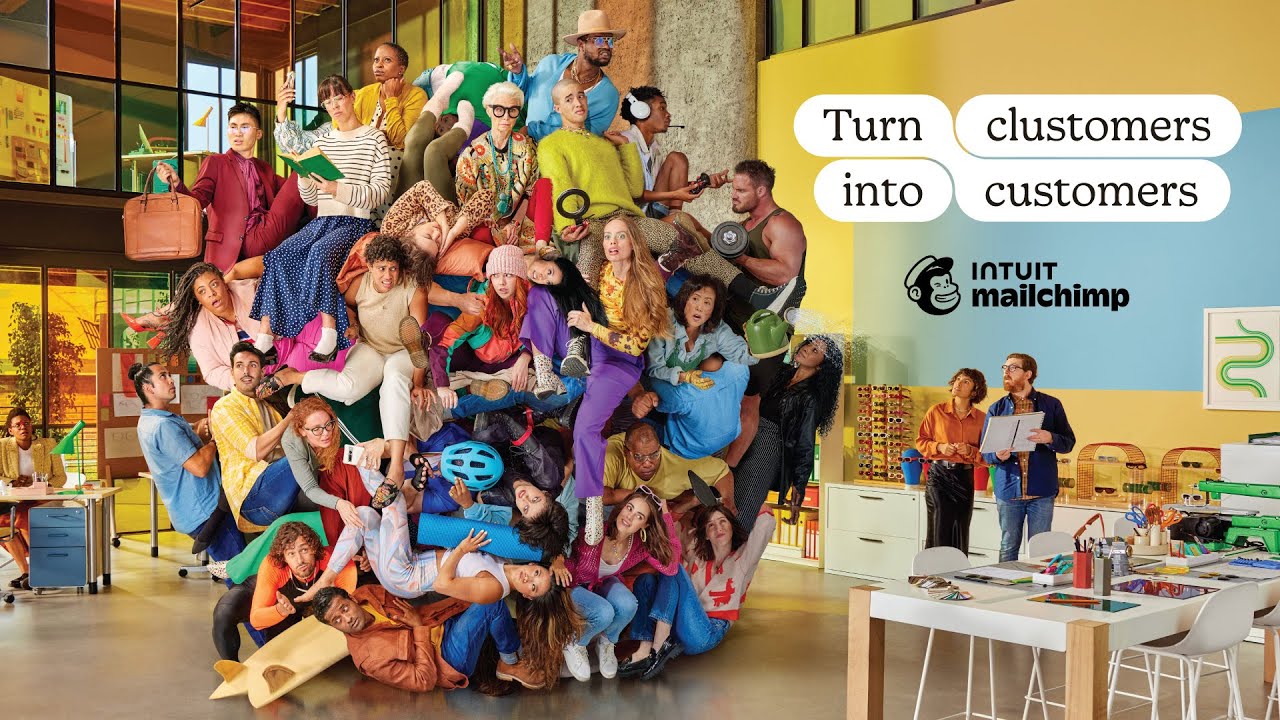
MailChimp made campaigns showing the brand’s core values without mentioning its name!
MailChimp’s Campaign “Did You Mean…?” showcased a series of humorous mini-campaigns and activations based on common mispronunciations of the word "Mailchimp."
They used “JailBlimp” or “MailShrimp” instead of “MailChimp” for their promotional messaging.

This unique campaign relies on vibrant colors and designs, as well as promotional emails sent to subscribers.
Maybe the campaign looked silly and nonsensical, but people loved it!
MailChimp attracted its target audience's attention while also emphasizing the significance of proper email marketing and demonstrating MailChimp's platform capabilities.
But that’s not all.
This campaign brought them:
- 988 million media impressions,
- 4 minutes per engagement (almost double the industry average),
- 67 million organic searches, and
- $3.52 million in revenue.
Not too bad, huh?!

Why this worked
Channel mix: The “Did You Mean…?” campaign combined PR, unusual real-world brand activations, social sharing, search demand, and email. Instead of pushing the product message directly, Mailchimp created memorable things people wanted to investigate and share, then connected those searches back to the brand.
Approximate results: The campaign generated 988 million earned media impressions, 4 million minutes of engagement, 67 million organic searches, and about $3.52 million in earned media value. Those figures are reported by Droga5, the campaign's agency.
Key takeaways:
- Think out of the box. Deploying unconventional SaaS marketing campaigns can be a game-changer for your business and help you attract your target audience.
- Making the audience curious about your product can help pull massive organic traffic.
- Ensure your campaigns contain elements that reflect your core values.
- Once you get the attention, move on to targeted product-led strategies to convert them effectively.
3. Monday.com

Even though Monday.com is a newer and smaller player in the project management platform market, it uses high-quality content to compete with big names like Asana, Trello, Notion, and ClickUp.
Since its start in 2016, Monday.com has been holding its own against the competition.
Monday.com focuses a lot on creating long-form content, which is crucial for building their strong SEO strategy.
Their 1,300+ blog posts says a lot about this approach that helps them rank high in search results for very valuable keywords, giving Monday.com a big advantage over their competitors.

But that’s not all.
Investing in other channels, such as social media and YouTube, shows how having various content can help grow a brand.
And one campaign gave them a real boost.
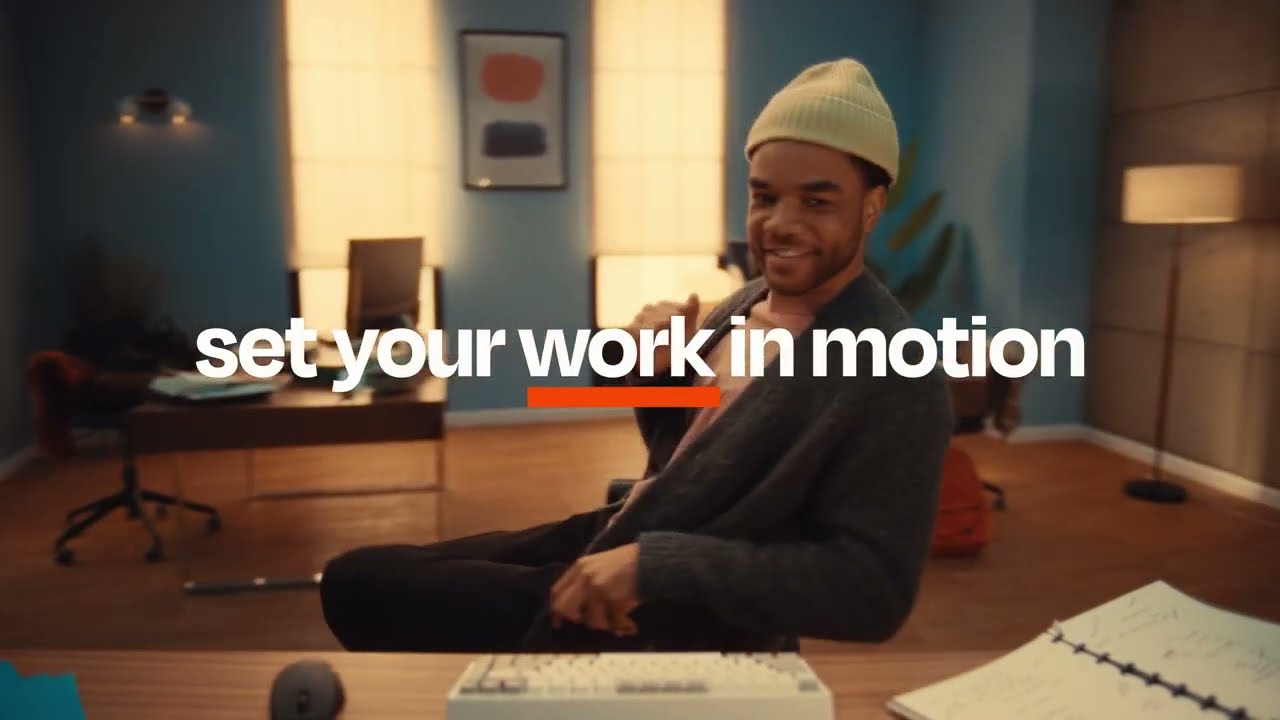
Office supplies turned into living animals was an amazing campaign launched by the company during the most severe stage of the COVID-19 outbreak.
It makes us think of the scene in the cartoon "The Brave Little Toaster," where all these lifeless objects come to life while no one is around.

The purpose of the video was to show the public they were no longer needed in physical offices.
Employees can complete their work from home without compromising their coworkers by utilizing their platform.
And they’re present on different channels connecting with their audience.
Isn’t that a dream of every SaaS startup besides building a unicorn?
Why this worked
Channel mix: The campaign used short-form video and visual storytelling to explain the shift away from traditional offices, supported by the brand's wider YouTube, social, and content presence. The creative did the heavy lifting: instead of explaining remote work with product features, it turned an abstract workplace change into something people could immediately understand.
Approximate results: The draft cites 366 million views, but that figure refers to the monday.com YouTube presence rather than a clearly isolated result for this single campaign. There is no reliable campaign-level view or conversion figure in the public sources I found, so the 366 million figure should not be presented as attributable solely to the campaign.
Key takeaways:
- Focus on High-Quality Content - Monday.com leverages high-quality, long-form content to build a strong SEO strategy. Creating detailed and valuable blog posts can help you rank higher in search results and compete with bigger names in your industry.
- Consistency in Content Creation - With over 1,300 blog posts, Monday.com shows consistent content creation is crucial. Regularly publishing informative and engaging content can help establish your brand’s authority and attract more organic traffic.
- Diversify Content Channels—Monday.com doesn't rely solely on blog posts. It also invests in other channels like social media and YouTube. Creating content for multiple platforms can help you reach a broader audience and boost brand growth.
- Adapt to Current Events - The "Back to the Office" campaign was timely and addressed the shift to remote work. Align your campaigns with current events or trends to make them more relevant and impactful.
- Utilize Video Marketing - Video content, especially on platforms like YouTube, can significantly enhance your reach. Invest in creating engaging video content to connect with your audience more deeply.
4. Slack

Slack is a messaging app for businesses that connects people to the information that they need.
Slack changes how businesses communicate by connecting workers to work as one team.
It combines group and one-on-one messaging, and companies control who uses it with an invite system.
With instant messaging, group chat, video calls, and file sharing, teams can share information across devices and web apps easily.

With Slack, you can work in a more connected, flexible, and inclusive way.
In 2014, Slack launched with 8,000 active users.
Today, it has 47.2 million daily active users with 200,000 paid customers.

So, how did Slack achieve its substantial growth?
Most of its growth is from word-of-mouth marketing.
From the very first moment, they use the positive feedback from happy customers to promote a brand.
It's cost-effective, using social proof to attract qualified leads and sales.
For word-of-mouth marketing to work, you need to provide a high-quality product that's easy to use and excellent customer service, often with guidance from SaaS marketing agencies.
What additionally distinguishes Slack is that it stands as an amazing example of how well the freemium model can work if you really have a great product.
Why this worked
Channel mix: Slack combined launch PR with a product experience designed to spread inside teams. The invite-based model made the service naturally collaborative: one person could bring colleagues into the same workspace, while press coverage created the initial awareness. Word of mouth then reinforced the effect as teams experienced the product together.
Approximate results: During its 2013 preview release, Slack received 8,000 invitation requests on the first day and about 15,000 after two weeks. The much larger user figures cited elsewhere in the draft are company-level adoption metrics and should not be treated as the result of one campaign.
Key Takeaways:
- Don't underestimate word-of-mouth. Provide a high-quality product that customers love. It will help you spread the word.
- Provide a freemium model or free trial so your ideal customers can try your product.
- Deliver excellent customer service. Even a great product will lose customers with poor service.
5. Canva

Canva, the free online graphic design platform, has grown significantly.
Its success comes from smart marketing campaigns.
Main principles that helped Canva grow:
- They Started Small - Canva began by focusing on a small, specific group of high-expectation customers (HXC). They figured out what this niche audience needed and built features to meet those needs.
- Used Key Channels - Canva used top channels like email and social media to reach their target market. They shared positive customer experiences to attract new users.
- Offered Guides - Canva provided guides to help users easily navigate the platform.
- Influencer Partnerships - Canva teamed up with influencers like Guy Kawasaki. This, along with podcasts and viral content, boosted their efforts.
- Invested into Product-Led Growth (PLG) - Canva now uses a PLG strategy and creates SEO-driven content to expand globally. The product itself is the company's hero.
No wonder Canva has over 100 Million users.
Why this worked
Channel mix: Canva's growth playbook combined product-led adoption with social sharing, email, educational content, and influencer or evangelist partnerships. Bringing in a recognised evangelist such as Guy Kawasaki extended the brand's reach while keeping the product itself at the centre of the message.
Approximate results: When Canva announced Guy Kawasaki as Chief Evangelist, it reported more than 330,000 users creating 100,000 designs per week and more than 1.5 million designs created in six months. Canva later reported more than 100 million monthly users. These are broader growth milestones, not results attributable to one campaign.
Key takeaways from Canva’s marketing campaigns:
- Understand Needs - Know your target market's needs and pain points to create the right product.
- Start Small - Focus on a specific audience that will benefit most from your product. This can lead to positive word-of-mouth.
- Partner with Influencers - Work with influencers to amplify word-of-mouth. Use strategies like podcasts, viral content, and SEO-driven content to reach your goals.
- Improve Continuously - Keep improving your product based on market needs. This helps you thrive in the long run.
6. Pitch

Pitch is a presentation software maker that wanted to raise awareness for its brand.
They started a campaign to let potential customers know about their work after securing new funding.
Pitch’s CEO and founder, Christian Reber, presented the video campaign to add a personal touch and better connect with the audience.

Chris shared how the company was doing and what new features would come from the funding.
The CEO speaking directly to the audience gave the campaign a personal touch, which was very successful.
This news and brand awareness campaign brought Pitch hundreds of referring domains and PR links to their website.
It also informed customers about their less-known products.
This helped pitch to leverage their brand awareness campaign and also boost their SEO efforts.
Why this worked
Channel mix: Pitch turned a funding announcement into a broader brand-awareness asset by combining a founder-led video, PR, product news, investor credibility, and a clear roadmap. The CEO was not simply announcing funding; he was giving the audience a reason to understand where the product was going and why the milestone mattered.
Approximate results: Six months after its public launch, Pitch said tens of thousands of teams had adopted the product and 125,000 workspaces had been created. The original article also says the campaign generated hundreds of referring domains, but I could not independently verify a precise number from a primary source, so it is better to leave that figure as stated rather than add a new estimate.
Key takeaways:
- Show the CEO as a Face of the Campaign - Use your CEO or company founder to personally connect with your audience. This adds authenticity and builds trust, enhancing the impact of your brand awareness efforts.
- Communicate Milestones Clearly - Communicate key company milestones and achievements, such as securing funding and upcoming product features, transparently and effectively. This will help you generate excitement and credibility among potential customers.
- Harness the Power of Video - Utilize video content strategically to convey your message. Videos are engaging and can effectively communicate complex information in a straightforward manner, capturing the audience's attention.
- Educate Audience about Product Portfolio - Use campaigns not only to promote flagship products but also to educate customers about lesser-known offerings. This expands customer understanding and encourages exploration of your entire product range.
7. Dropbox

Dropbox's initial launch sent shockwaves through the online world.
Large file transfers over the Internet became possible with this software, which wasn't possible earlier.
Dropbox enables you to deliver large files and share trackable links with real-time document analytics to help make data-driven decisions.
Whether you choose Dropbox for work or personal use, you may get advantages such as:
👍 Fast upload speeds
👍 Plenty of additional features
👍 Integrations with thousands of application
👍 Unlimited file size
👍 Multiple layers of protection

So, what SaaS marketing campaign helped Dropbox grow drastically?
Referral programs are common in SaaS, but they can be tricky to implement correctly. Dropbox is a great example.
They saw huge growth potential in its early years with a simple offer:
Dropbox gave users 500MB of free storage for each new customer they referred, up to 16GB.
This meant free users, who normally had 2GB of storage, could earn up to 16GB by referring 28 friends.
This program was very successful, increasing Dropbox's user base by 3900% in just 15 months.
Before the campaign started in September 2008, Dropbox had 100,000 users.
By December 2009, it had over 4 million users, quickly reaching unicorn status.
Conversely, Dropbox's referral program cost the company almost nothing, as it rewarded users with extra storage instead of money.
Why this worked
Channel mix: Dropbox embedded the campaign directly into the product through referral links, then amplified it through email and user-to-user sharing. The reward was also tightly aligned with the product: users received more of the thing they already valued, rather than an unrelated discount or cash incentive.
Approximate results: Dropbox grew from about 100,000 registered users in September 2008 to more than 4 million by December 2009, a roughly 3,900% increase in 15 months. At peak, about 35% of daily signups came from referrals. The referral mechanic is still part of Dropbox's product today, with Basic users able to earn 500MB per successful referral, up to 16GB.
Key takeaways:
- Build a referral program that rewards current users for bringing in new customers. This will help you get more users and create loyalty and a strong community.
- Think about how you can gift your current users with credits, tokens, or other types of rewards related to your product. This will improve your tool’s usage and encourage users to use it daily.
8. HubSpot

With 216,000+ customers growing their businesses in over 135 countries worldwide, Hubspot certainly deserves to be on this list.
HubSpot has free CRM tools for everyone on your team!
It offers a range of capabilities to help young entrepreneurs, established firms, and mid-sized organizations enhance their business operations.
So, what helped them grow this much?
Education.
Hubspot is great at inbound marketing.
They often appear at the top of Google search results with their helpful guides, tutorials, and videos.
HubSpot covers all marketing-related topics that helped them create a loyal customer base and achieve massive organic traffic.
According to Ahrefs, they generate over 1.8M monthly organic visitors, which helps them convert a huge number of people who come to their website.

In short, they have many ways to attract their audience instead of chasing after them.
For example their Hubspot Academy offers lots of valuable educational resources, which brings in even more traffic and conversions.
Why this worked
Channel mix: HubSpot used free tools as an acquisition channel alongside SEO, educational content, and inbound marketing. The tool solved a real problem before asking the visitor to buy anything, while the resulting report created a natural bridge into educational resources and HubSpot's wider product ecosystem.
Approximate results: HubSpot reported that Website Grader had evaluated 4 million websites since its 2007 launch. Earlier, the company reported the tool had surpassed 2 million website URLs analysed, describing its original purpose as generating buzz, organic and viral traffic, inbound links, and leads. The free-tool strategy is still active today through HubSpot's current free business tools.
Key takeaways:
- Focus on Educating Your users - Provide helpful guides, tutorials, and videos to educate your audience. This builds trust and positions your brand as an authority.
- Use the Power of Inbound Marketing - Create content that attracts visitors naturally, without chasing after them. Focus on SaaS SEO to rank high in search results.
- Offer Valuable Resources - Launch a platform similar to HubSpot Academy that offers free educational resources. This can drive traffic and build a loyal customer base.
- Free Tools - Offer free tools that can benefit different segments of your audience. This attracts more users and can convert them into paying customers.
- Build Authority - Consistently produce high-quality content that addresses the needs of your target audience. This establishes your brand as a trusted resource.
Conclusion
A well-run marketing campaign may greatly impact your company's success.
It’s exactly what it helped these companies achieve.
Because of their inventiveness, effectiveness, and unique style, these SaaS marketing campaigns have raised the standard for SaaS businesses worldwide.
Some companies tried to be funny or controversial, while others focused on explaining the potential benefits.
Whatever your choice is, make sure to plan it properly, implement, learn, and adapt accordingly.
It’s the only way to grow your SaaS business and bring it to the next level fast.
Need help with implementing some of those campaigns?
Reach out and schedule a free call to find out which one of these campaigns can help you grow your business.
FAQs
What is a SaaS marketing campaign?
A SaaS marketing campaign is a focused set of marketing activities designed to achieve a specific goal, such as generating awareness, attracting sign-ups, increasing product adoption, or driving upgrades. A campaign usually has a defined audience, message, channels, timeframe, and measurable outcome.
What makes a SaaS marketing campaign successful?
Strong SaaS campaigns usually connect a clear customer problem with a simple message and a channel mix that matches how the audience discovers and evaluates software. The examples in this article show several approaches, including SEO, PR, referral loops, free tools, content, video, and product-led growth.
Are referral programmes effective for SaaS?
They can be particularly effective when the reward is directly connected to the product and sharing is easy. Dropbox is a strong example: the referral reward gave users additional storage, making the incentive useful rather than separate from the product experience.
What is product-led marketing in SaaS?
Product-led marketing uses the product itself to attract, engage, or convert users. Free plans, free tools, templates, referrals, collaborative features, and self-serve experiences can all contribute to this approach by giving prospects a practical way to experience value before a sales conversation.
Should SaaS companies copy successful campaigns from other brands?
It is usually more useful to copy the underlying mechanism than the creative execution. For example, a company can learn from Dropbox's referral loop or HubSpot's free-tool model without copying the exact reward, product, or messaging.
How much does a SaaS marketing campaign cost?
Costs vary widely depending on the objective, audience, channels, creative production, media spend, and campaign duration. A founder-led content or referral campaign can require relatively little cash investment, while a large brand campaign involving television, outdoor media, or major events can require a substantially larger budget.


.png)

.svg)
















.svg)



























.svg)